
Expert insights
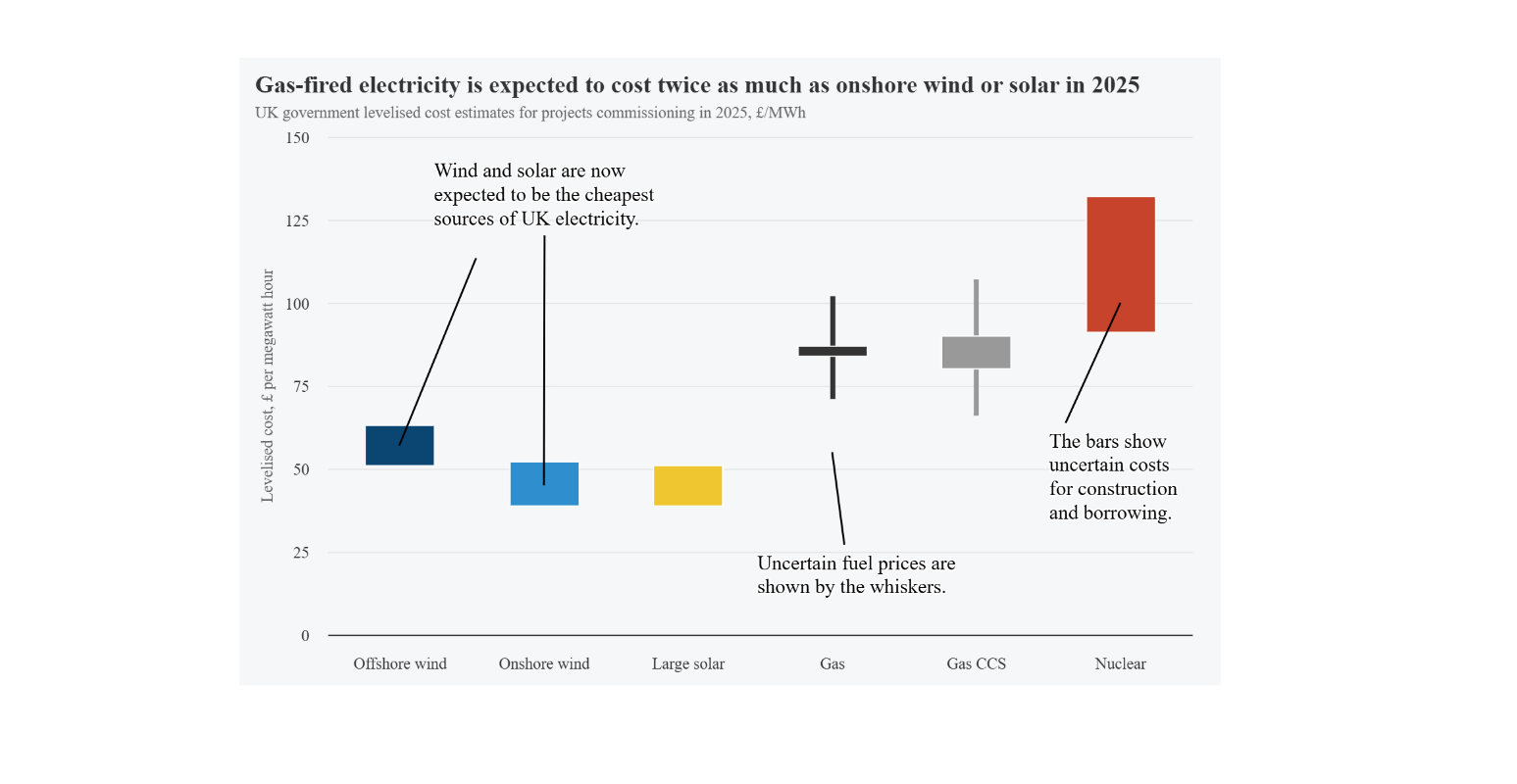
The economics of solar power have changed dramatically over the past decade. As illustrated in the graph below, the estimated average cost of generating electricity over a project’s lifetime (known as the Levelised Cost of Electricity (LCOE)) indicates that last year utility-scale solar had become one of the lowest-cost sources of new electricity generation in the UK, costing around half as much per megawatt hour (MWh) as gas-fired generation.
This decreasing cost trend has continued into 2026 and has been driven by several factors, including significant reductions in the cost of photovoltaic (PV) technology. Between 2021 and 2026, solar panel prices have continued to fall, with residential installations seeing typical cost reductions of around 15–25%, while commercial-scale projects have benefited from reductions of approximately 30–40%. Improvements in panel efficiency, installation techniques and supply chains have further strengthened the commercial case for solar investment.
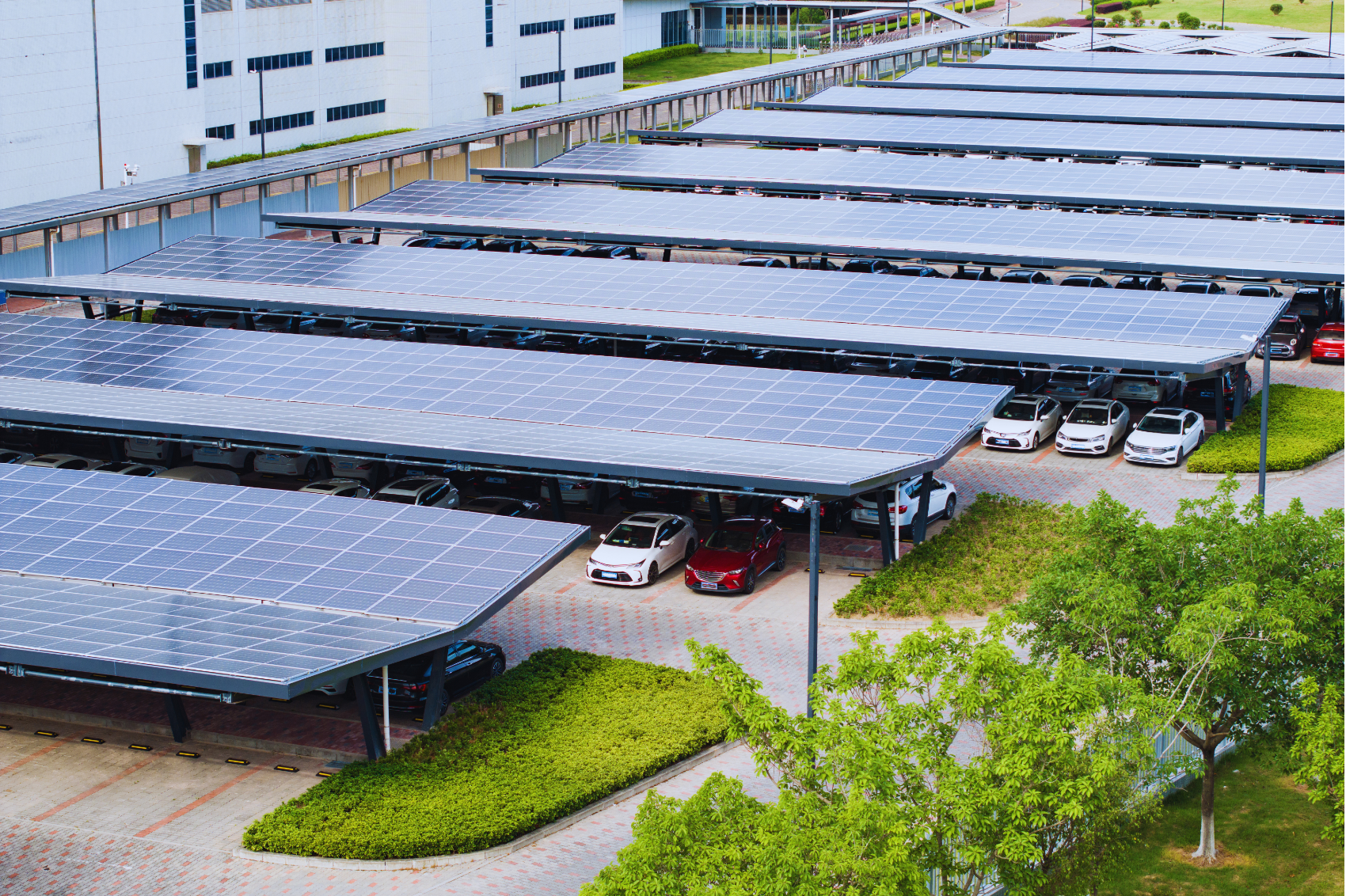
As the cost of solar has fallen, the range of commercially viable applications has expanded considerably. While rooftop installations and ground-mounted solar farms have become increasingly familiar, one opportunity remains relatively overlooked in the UK: solar car parks.
For landowners with large areas of surface parking, solar canopies can transform an existing operational asset into a source of renewable electricity. Beyond reducing energy costs, they can support EV charging infrastructure, improve sustainability credentials and make more productive use of previously developed land, all without changing the primary function of the site.
As businesses continue to seek ways to reduce operating costs and meet decarbonisation targets, solar car parks represent a significant renewable energy opportunity within the built environment.
Car parks are often overlooked as potential energy assets. However, many organisations already own or operate large areas of hardstanding that have strong potential for solar generation.
Solar car parks offer several benefits compared with developing new greenfield renewable energy sites:
Making better use of existing land
Solar canopies utilise areas that are already developed and allocated for parking, avoiding the need to develop untouched greenfield land for renewable energy generation.
Solar car parks can also be more publicly acceptable than ground-mounted solar farms because they make productive use of previously developed land rather than agricultural or undeveloped greenfield sites. As a result, concerns relating to landscape character are often reduced and there is no loss of productive farmland.
Creating value from existing assets
Solar car parks can facilitate a range of benefits depending on how a project is structured. For sites with significant daytime electricity demand, such as offices, retail parks, hospitals, universities and industrial facilities, generating electricity on-site through a private wire or behind-the-meter arrangement can reduce reliance on imported electricity and provide greater certainty over future energy costs.
Alternatively, where electricity is exported to the grid or delivered through other commercial arrangements, solar car parks can create a new revenue stream while supporting wider renewable energy generation. In both cases, they offer property owners the ability to unlock value from existing land assets that are already serving an operational purpose.
Supporting the transition to electric vehicles (EV)
The continued growth of EV ownership will require significant investment in charging infrastructure.
Solar car parks can be integrated with EV charging infrastructure, enabling renewable electricity generation and electric vehicle charging to operate alongside one another.
Supporting corporate sustainability objectives
Delivering visible renewable energy infrastructure through use of existing assets such as car parks can demonstrate commitment to Net Zero targets and wider environmental objectives, while delivering practical operational benefits.
Decreasing cost trends
Renewable energy generation through the use of existing car parks avoids the costly and lengthy process of acquiring new land for renewable energy generation.
Further, as solar technology has become one of the lowest-cost forms of new electricity generation, the commercial case for making productive use of existing car parks has become increasingly compelling.
Not every car park will be suitable for solar canopy development. Successful projects require early consideration of a range of technical, commercial and planning factors.
Key considerations include:
An early feasibility assessment can help identify opportunities and potential constraints before significant project commitments are made.
There is no single funding model for solar car parks.
Solar car park projects can be delivered through a range of commercial and funding arrangements, depending on an organisation’s objectives, investment priorities and long-term energy strategy.
There are a range of established funding and delivery mechanisms available to support solar car park developments.
Project delivery can be structured in a variety of ways, ranging from direct ownership through to third-party investment and managed service arrangements.
The suitability of any approach will depend on factors such as energy demand, project scale, operational requirements and long-term business objectives.
The availability of multiple delivery and funding options means that organisations do not necessarily need to rely solely on capital budgets to explore solar car park opportunities.
One of the first questions clients often ask is whether a solar car park will require planning permission.
The answer depends on a range of factors, including the size and design of the installation, the characteristics of the site and whether permitted development rights apply.
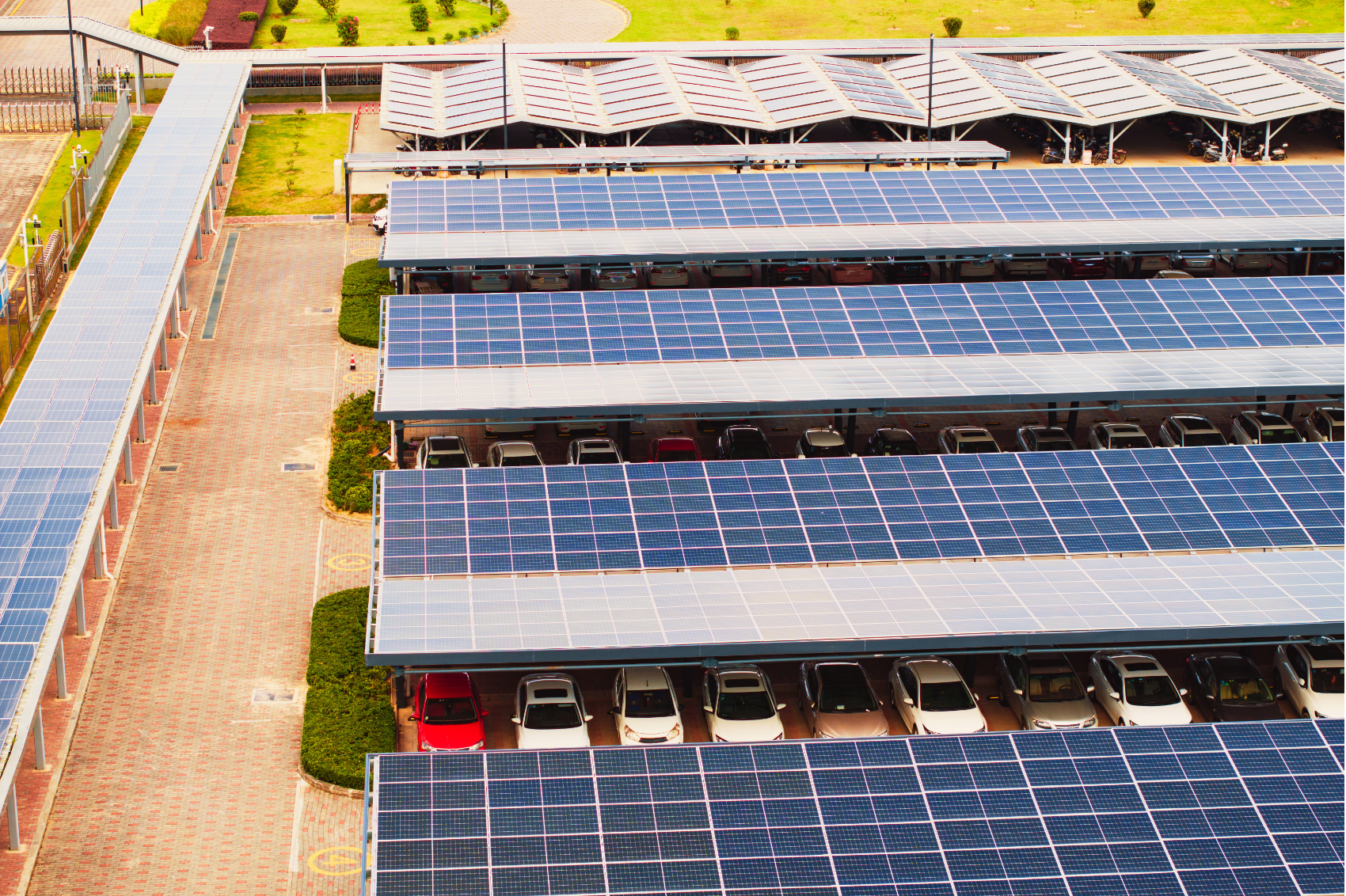
Permitted Development Rights – Class OA
(The installation, alteration or replacement of a solar canopy within an area lawfully used as off-street parking other than for a dwellinghouse or a block of flats).
Class OA of the General Permitted Development Order provides the permitted development rights applying to solar car parks; however, it is subject to a prior approval process.
Before development can proceed, a prior approval application must be submitted so that the local planning authority can assess a number of matters, principally:
Applicants must also satisfy a number of additional conditions, including completing the development within three years of receiving prior approval and removing the solar canopies once they are no longer required.
Further, development is not permitted under Class OA where, amongst other matters, the solar canopies exceed four metres in height, are located within 10 metres of a residential curtilage, where listed buildings or scheduled monuments are affected, where any part of the development proposals is for the display of an advert and where they are located within the curtilage of a dwellinghouse.
Should development fail to meet any of these technical requirements, be in an excluded location or fail to meet any of the above conditions, a full planning application is required.
Despite the clear opportunities, solar car parks remain relatively uncommon in the UK compared with rooftop solar and ground-mounted solar farms.
Several factors contribute to this, including:
However, as energy prices remain a key business consideration and practical ways are sought to achieve decarbonisation targets, these barriers are increasingly being overcome.
The most successful projects are typically those that adopt a holistic approach from the outset.
Solar car parks unlock the potential for renewable energy generation from land that is already in productive use.
As businesses, public sector bodies and landowners seek to reduce operating costs, strengthen energy resilience and deliver against ambitious sustainability targets, solar car parks present an opportunity to generate long-term value from land that is already in everyday use. For many sites, the next renewable energy project may not require acquiring additional land; it may simply require looking differently at the land that already exists.
Determining whether a solar car park is feasible requires careful consideration of planning, environmental and site-specific factors.
Early consideration of planning matters can help inform project design and decision-making.
Understanding planning considerations at an early stage can help inform project viability and delivery strategy.
Frankham’s planning team supports renewable energy projects across England, providing planning and development advice throughout the project lifecycle.